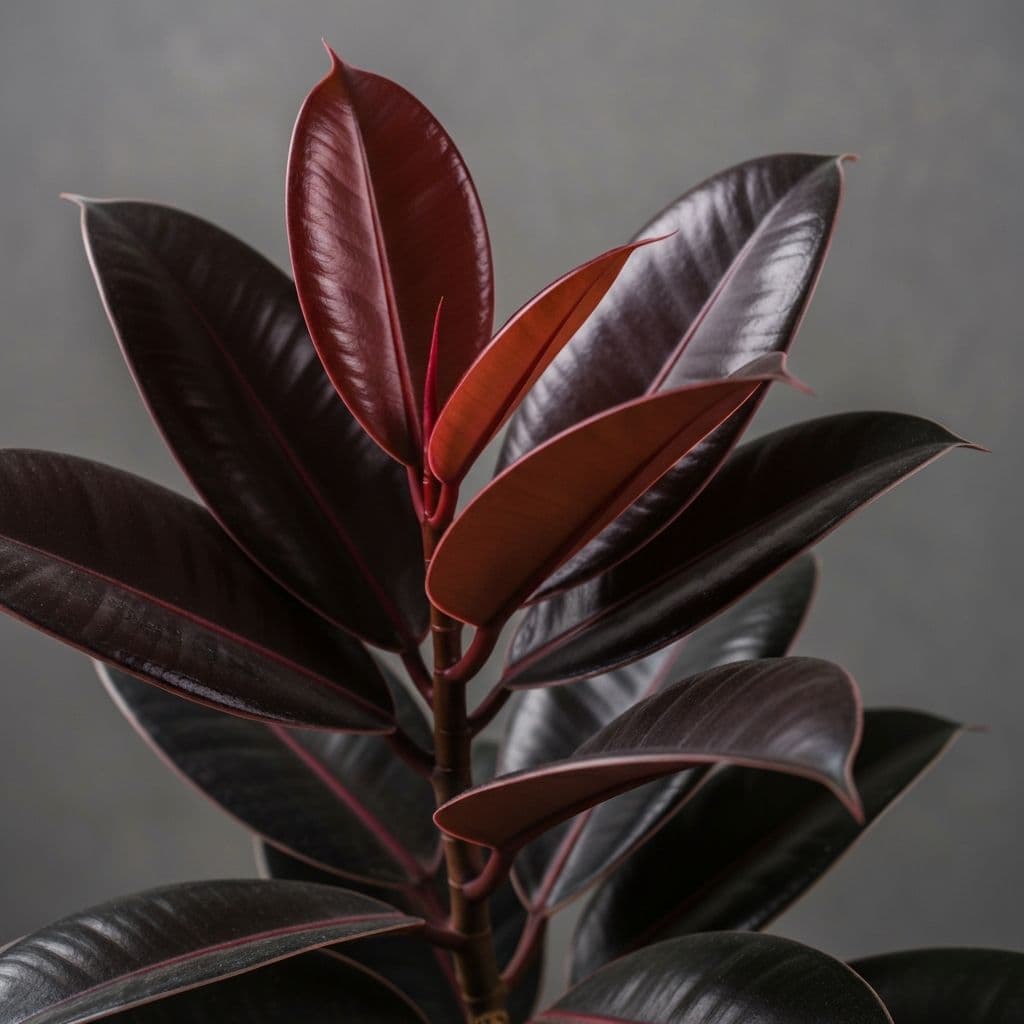
Rubber Plant
Ficus elastica
Rubber Plant
Ficus elastica
Bold, glossy-leaved tree that makes a dramatic statement in any room. Tolerates some neglect once established but rewards attentive care with impressive growth.
About Rubber Plant
Native to Southeast Asia, the rubber plant is a classic houseplant that's been popular since Victorian times. With its thick, leathery leaves in deep burgundy or variegated patterns, it adds architectural drama to any space. It's more forgiving than its cousin the fiddle leaf fig while delivering similar visual impact.


Medium-High Light
Bright indirect light brings out the best color in rubber plants, especially the darker burgundy varieties. They tolerate medium light but may become leggy. Variegated types need more light to maintain their patterns. Avoid direct sun which can scorch leaves.
Ideal window: East or South-facing windows work best. East windows provide gentle morning light, while south windows offer bright indirect light. Variegated varieties need the brighter end of this range to maintain their patterns.
Note: Window direction recommendations are based on the Northern Hemisphere.
Dust accumulates easily on the large leaves. Wipe them regularly with a damp cloth to keep them glossy and help the plant photosynthesize efficiently.


Moderate — Weekly
Water when the top inch of soil is dry. Rubber plants store water in their thick leaves, so they handle occasional underwatering better than overwatering. Yellow dropping leaves usually indicate too much water. In winter, reduce watering significantly.
Average household humidity is fine. Rubber plants appreciate occasional misting or a nearby humidifier, especially in dry winter months, but don't require it.
Standard — 60-75°F
Keep between 60-75°F (15-24°C). Rubber plants dislike temperature fluctuations and cold drafts. Keep away from exterior doors and heating/cooling vents.
Dropping leaves
Usually caused by overwatering, underwatering extremes, or cold drafts. Check soil moisture and location.
Leggy growth
Insufficient light. Move to a brighter spot and consider pruning to encourage branching.
Loss of variegation
Variegated types losing their patterns need more light.
Rubber plants work as stunning floor plants or tabletop specimens when young. The burgundy varieties pair beautifully with warm-toned interiors, while variegated types brighten modern spaces.
Bottom Watering Compatibility
Works well with bottom watering but allow soil to dry slightly between waterings to prevent root issues.