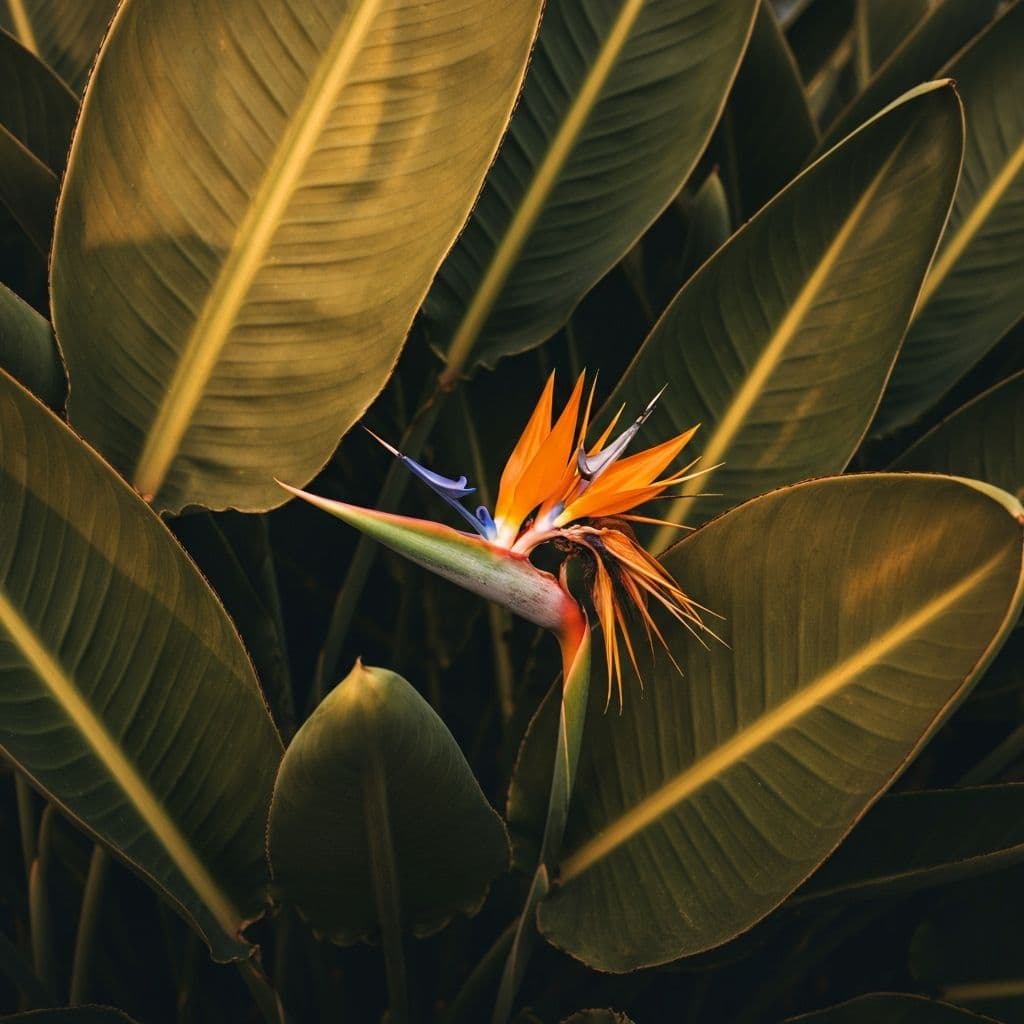
Bird of Paradise
Strelitzia reginae
Bird of Paradise
Strelitzia reginae
Dramatic tropical plant with large, banana-like leaves. Creates an instant statement with its bold, architectural foliage.
About Bird of Paradise
Native to South Africa, the bird of paradise is the ultimate statement plant. Its enormous paddle-shaped leaves evoke tropical paradise and make any room feel like a resort. While it rarely blooms indoors, the foliage alone is stunning enough to justify its place in your collection.

High Light
Needs bright light—ideally several hours of direct sun—to thrive and potentially bloom. Can adapt to medium light but grows more slowly and won't flower.
Ideal window: South or West-facing windows are ideal. South windows provide the most consistent bright light, while west windows offer strong afternoon sun. This plant loves as much light as you can give it.
Note: Window direction recommendations are based on the Northern Hemisphere.
Curling leaves during the day often indicate too much direct sun or underwatering. Leaves naturally curl slightly at night, which is normal.


Moderate — Weekly
Water thoroughly when the top 2 inches of soil are dry. Bird of paradise likes consistent moisture during growing season but tolerates occasional drought. Reduce watering in winter.
Prefers moderate to high humidity. Benefits from regular misting, a pebble tray, or nearby humidifier. Dry air can cause brown leaf edges.
Warm — 65-85°F
Loves warmth—65-85°F (18-29°C) during the day. Can tolerate temps down to 50°F (10°C) briefly but prefers consistent warmth.
Splitting leaves
Natural and normal—helps the plant handle wind in the wild. Not a sign of problems.
Brown leaf edges
Low humidity or underwatering. Increase humidity and check watering frequency.
No flowers
Bird of paradise rarely blooms indoors. It needs years of maturity, root-bound conditions, and abundant light to flower.
Bird of paradise demands to be a focal point. Place it in bright corners, near large windows, or anywhere you want bold tropical drama. Works beautifully in modern, minimalist, and bohemian spaces.
Bottom Watering Compatibility
Bird of paradise does well with bottom watering. Water thoroughly and allow soil to dry between waterings.