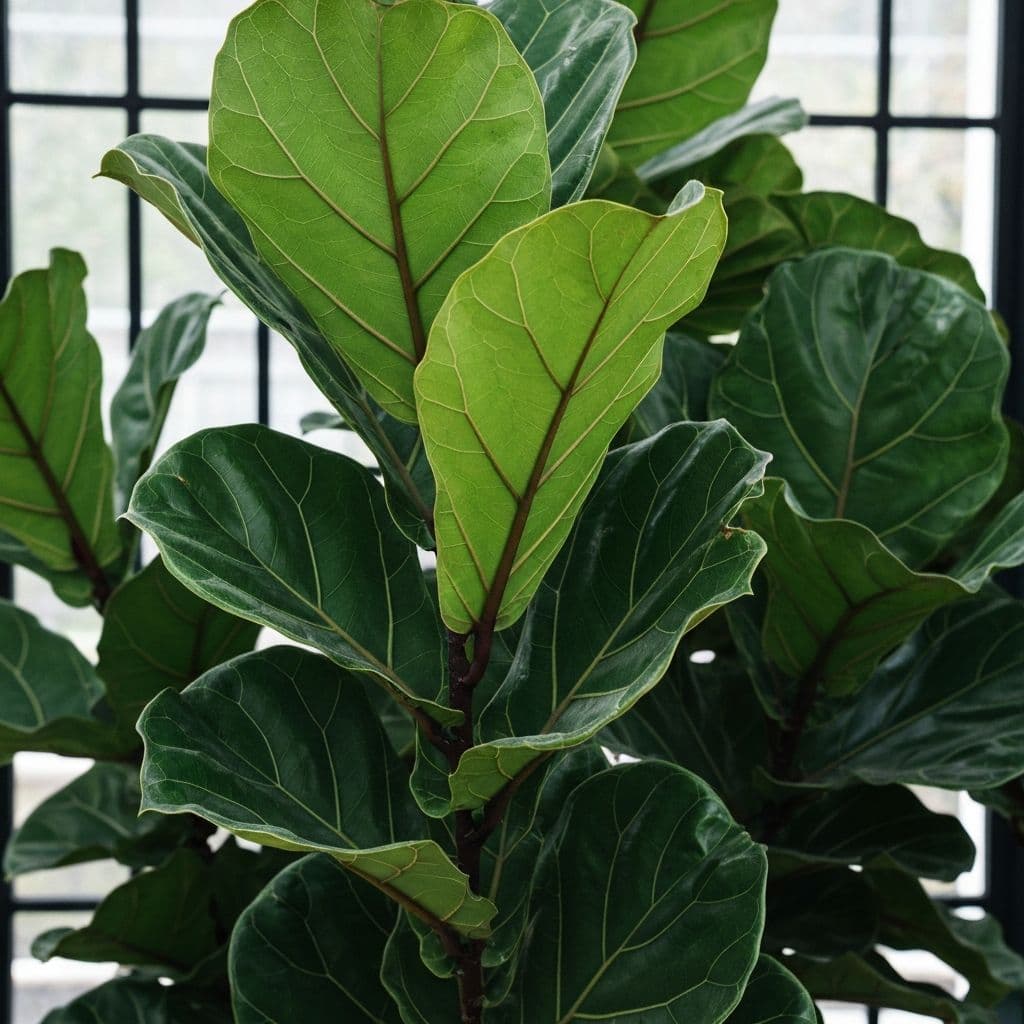
Fiddle Leaf Fig
Ficus lyrata
Fiddle Leaf Fig
Ficus lyrata
The dramatic darling of interior design with large, sculptural leaves. Beautiful but particular about its care requirements.
About Fiddle Leaf Fig
Native to the tropical rainforests of West Africa, fiddle leaf figs are the statement plant of Instagram feeds and design magazines. Their large, violin-shaped leaves make them immediately recognizable. They're also notoriously finicky—but understanding their needs makes care manageable. They want consistency above all else.
Fiddle leaf figs hate change. Once you find a spot where yours is happy, avoid moving it. Even rotating the pot can cause stress.


Medium-High Light
Bright, indirect light is essential. These plants come from West African rainforest edges where they receive filtered sunlight. They tolerate some direct morning sun but can burn in harsh afternoon light.
Ideal window: East or West-facing windows are perfect. East windows provide gentle morning sun, while west windows offer bright afternoon light (protect from intense direct rays with a sheer curtain if needed). South-facing windows work if the plant is set back a few feet.
Note: Window direction recommendations are based on the Northern Hemisphere.


Moderate — Weekly
The key to watering fiddle leaf figs: consistency. Water when the top 1-2 inches of soil are dry. They're sensitive to both overwatering and underwatering. In a POTSPOTSPOTS planter, monitor the reservoir weekly and maintain steady moisture without waterlogging.
Brown spots on fiddle leaf fig leaves often indicate watering problems. Crispy brown spots = underwatering. Dark brown spots with yellow halos = overwatering.
Moderate humidity (40-60%) keeps fiddle leaf figs happy. They can suffer in very dry conditions, especially in winter with heating on. Consider a humidifier if your home is particularly dry.
Standard — 60-80°F
Keep temperatures consistent between 60-75°F (15-24°C). Avoid cold drafts from windows, doors, or air conditioning vents. Sudden temperature changes can cause leaf drop.
Dropping leaves
Usually caused by a change in environment: new location, different light, temperature fluctuation, or draft exposure. Remove the stress source and wait patiently—new leaves will grow.
Brown spots
Check your watering. Dry, crispy brown spots indicate underwatering. Dark spots with yellow halos suggest overwatering or root rot. Bacterial infections also cause browning—isolate affected plants.
Leaning or reaching
The plant is seeking light. Rotate it slightly (1/4 turn) every month to maintain symmetry, but don't move it to a completely new location.
New leaves smaller than old ones
Insufficient light or nutrients. Move closer to a window and fertilize during the growing season.
Fiddle leaf figs work as standalone statement pieces. Their sculptural form suits modern and mid-century interiors. Choose a spot where they can grow tall without needing to be moved. A quality plant stand elevates smaller specimens.
Bottom Watering Compatibility
Fiddle leaf figs benefit from consistent moisture. Bottom watering helps avoid the overwatering that commonly kills these plants.