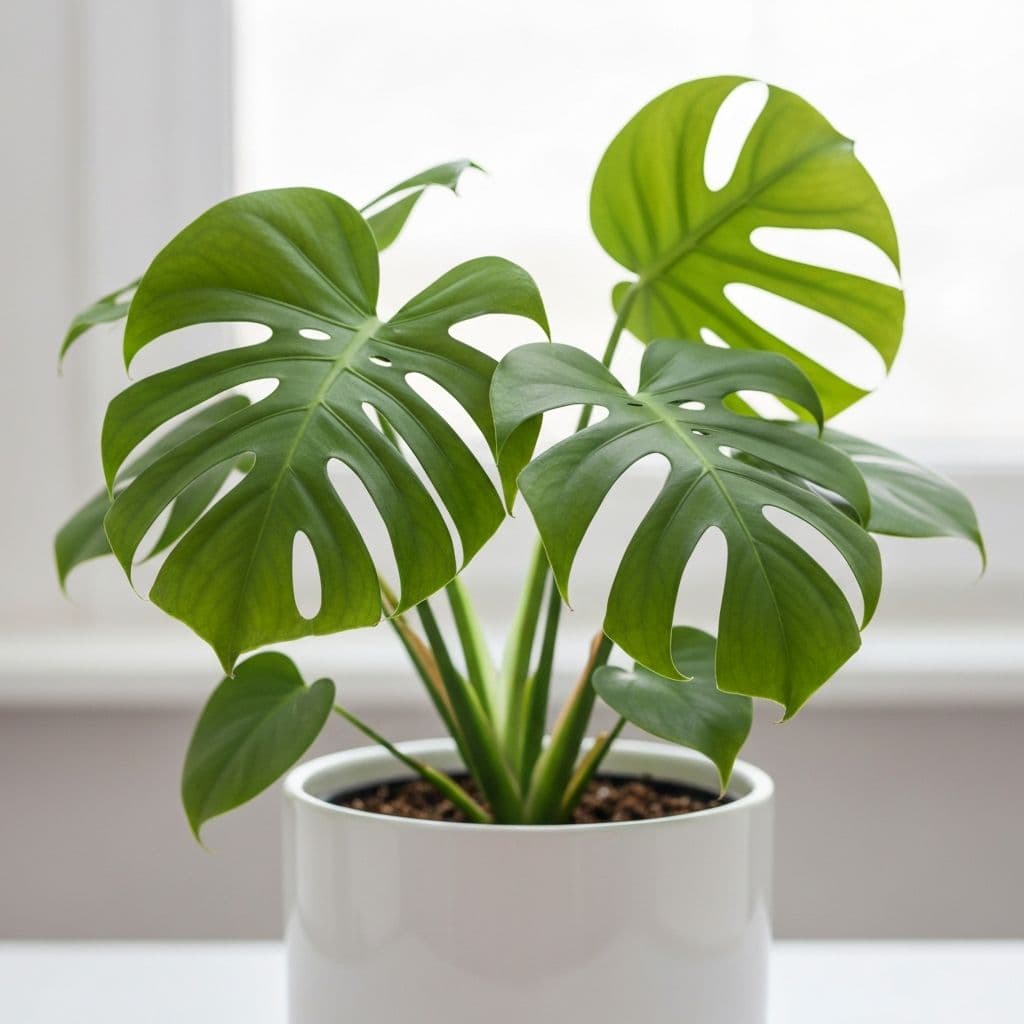
Monstera Deliciosa
Monstera deliciosa
Monstera Deliciosa
Monstera deliciosa
The iconic Swiss cheese plant with dramatic split leaves. A statement piece that rewards attentive care with impressive growth.
About Monstera
Native to Central America, Monstera deliciosa earned its name from the "delicious" fruit it produces in the wild (though rarely indoors). Known for its dramatic fenestrations—the splits and holes in mature leaves—monstera has become one of the most recognizable houseplants. Young plants have solid leaves; the characteristic splits develop as the plant matures.


Medium-High Light
Monstera needs bright, indirect light to develop its signature split leaves. It can tolerate medium light but will grow more slowly and produce fewer fenestrations. Avoid direct sun, which will scorch the leaves.
Ideal window: East or South-facing windows are ideal. East windows provide gentle morning light, while south windows offer bright indirect light that encourages larger leaves with more fenestrations. Filter harsh direct afternoon sun.
Note: Window direction recommendations are based on the Northern Hemisphere.
Fenestrations (the holes and splits in monstera leaves) develop in response to good light and maturity. A monstera in low light will produce smaller, unsplit leaves.


Moderate — Weekly
Water when the top 1-2 inches of soil feel dry. Monstera prefers consistent moisture but will suffer if left in soggy soil. In a POTSPOTSPOTS planter, the reservoir provides steady hydration—just monitor every 7-10 days and refill as needed.
Monstera appreciates humidity above 50% but adapts to average household levels. Brown leaf edges can indicate the air is too dry. Consider grouping plants together or using a humidity tray in winter when heating systems dry out indoor air.
Support
In nature, monstera climbs trees. Indoors, providing a moss pole or trellis encourages larger leaves and better fenestrations. Aerial roots will attach to the support over time, creating a striking vertical display.
Leaves without splits
Your monstera either needs more light or more time. Splits develop as the plant matures and produces larger leaves. Move it to brighter indirect light and be patient.
Yellow leaves
Usually overwatering. Check that soil is drying between waterings and that the pot drains well. Also check for root rot if yellowing is severe.
Brown leaf edges
Low humidity or inconsistent watering. Try misting occasionally or adding a pebble tray beneath the pot.
Slow or no growth
Likely insufficient light. Monstera grows actively in spring and summer with adequate light. In winter, growth naturally slows.
Monstera is a statement plant. Give it room to spread—it can eventually reach 8 feet or more indoors. A moss pole helps keep it vertical and encourages larger leaves. Works beautifully as a floor plant in a corner with bright indirect light.
Bottom Watering Compatibility
Monstera develops robust root systems that thrive with bottom watering. Let soil dry between watering cycles.