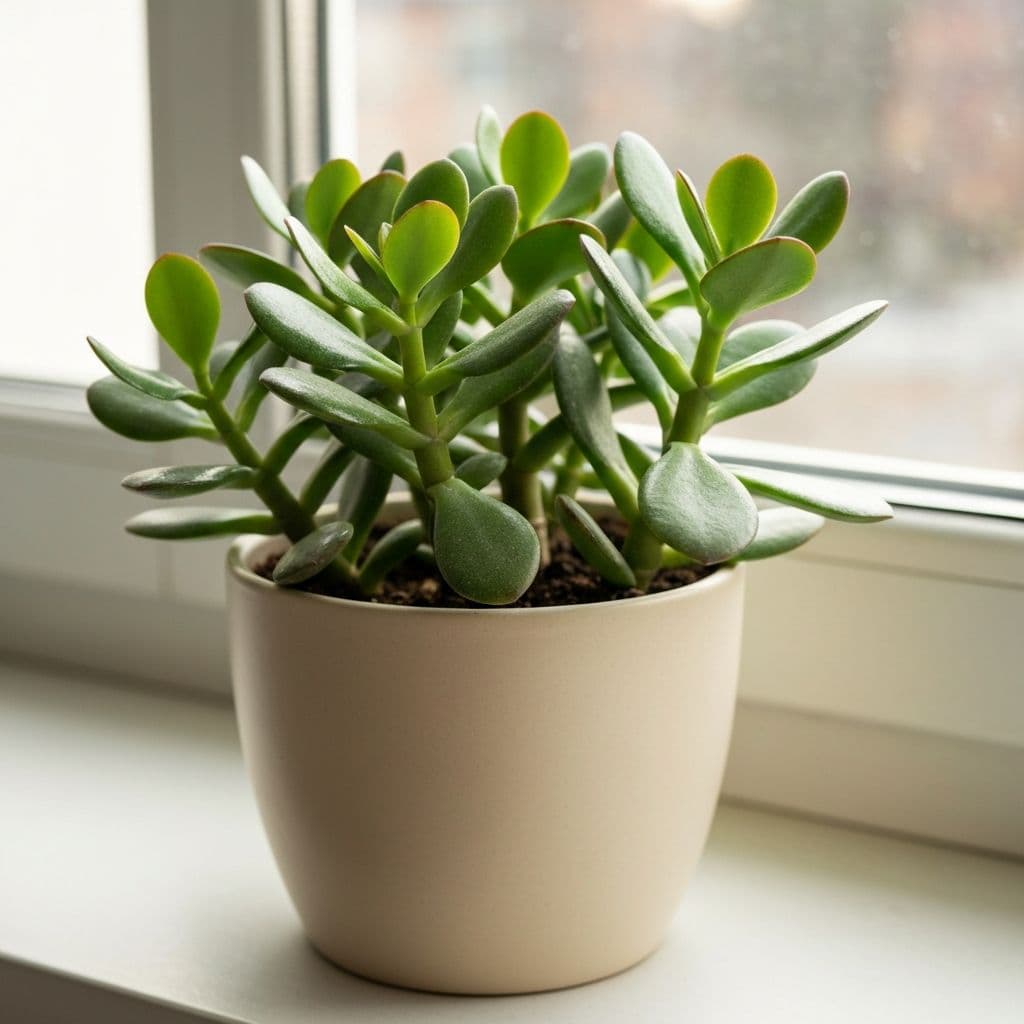
Jade Plant
Crassula ovata
Jade Plant
Crassula ovata
Long-lived succulent with thick, coin-shaped leaves. Symbol of good fortune, thrives on neglect and bright light.
About Jade Plant
Native to South Africa, jade plants can live for decades—even generations—becoming treasured family heirlooms. Their thick, glossy leaves and tree-like form make them popular for bonsai styling. In some cultures, they're considered symbols of prosperity and good luck.


Medium-High Light
Needs bright light with some direct sun. South or west-facing windows are ideal. Insufficient light causes leggy, weak growth. Outdoor time in summer strengthens plants.
Ideal window: South or West-facing windows work best. South windows provide consistent bright light, while west windows offer strong afternoon sun. Jade plants thrive with several hours of direct light daily.
Note: Window direction recommendations are based on the Northern Hemisphere.
Jade plants develop red-tinted leaf edges when exposed to adequate light and cooler temperatures. It's a sign of a happy, well-lit plant.


Low — Every 2-3 weeks
Water sparingly—every 2-3 weeks in summer, monthly in winter. Allow soil to dry completely between waterings. Wrinkled leaves indicate underwatering; mushy stems indicate overwatering.
Thrives in dry conditions. Average to low household humidity is perfect. Avoid excess moisture.
Cool-Tolerant — 55-75°F
Comfortable at 55-75°F (13-24°C). Tolerates brief cooler periods which can encourage blooming. Avoid frost.
Mushy, transparent leaves
Overwatering and root rot. Reduce watering dramatically and check for root damage.
Wrinkled leaves
Underwatering. Give a thorough drink and resume regular (but infrequent) watering.
Leggy growth
Insufficient light. Move to a brighter location and consider pruning to shape.
Jade plants develop character with age, becoming architectural specimens. Style as bonsai or let grow naturally. Their longevity makes them meaningful gift plants.
Bottom Watering Compatibility
Water sparingly from below. Jade plants store water in their leaves and prefer to dry out completely between waterings.