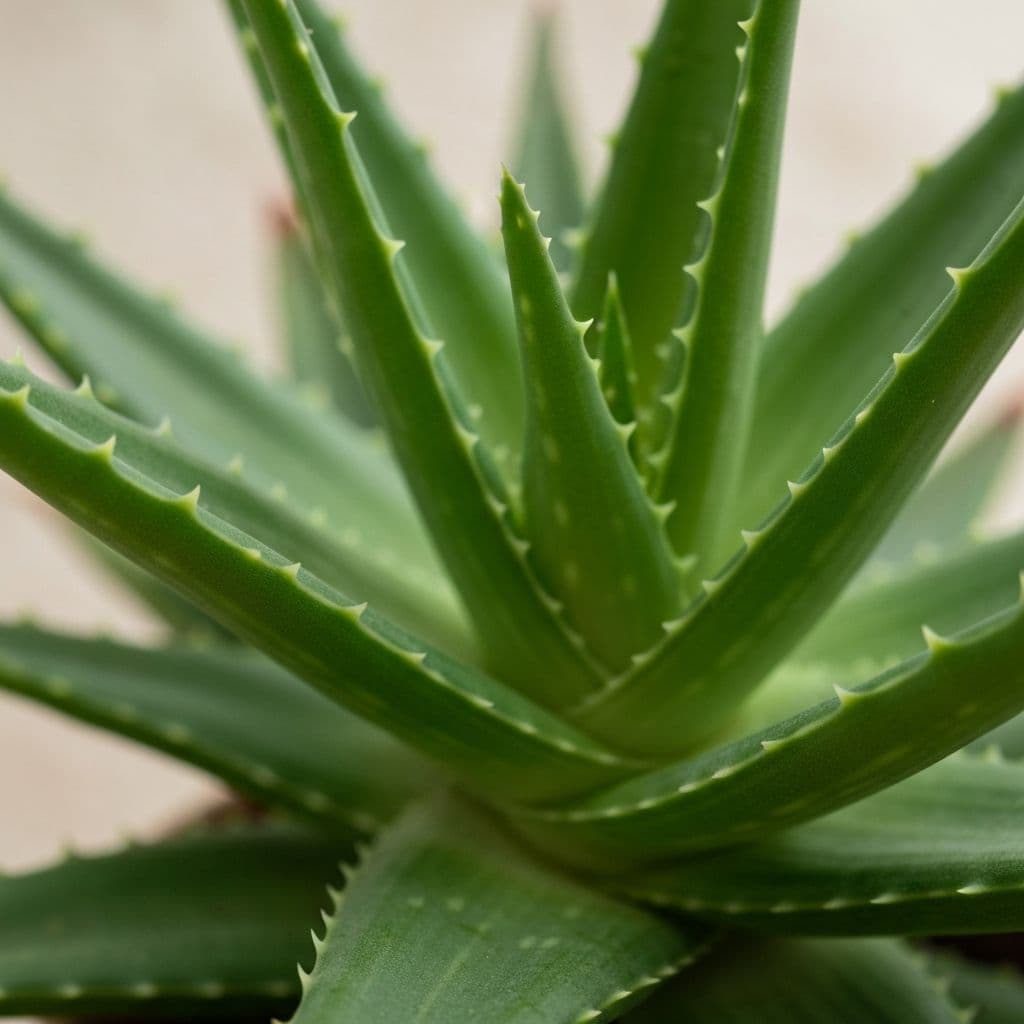
Aloe Vera
Aloe vera
Aloe Vera
Aloe vera
Medicinal succulent with thick, gel-filled leaves. Low-maintenance and useful for burns—a practical addition to any home.
About Aloe Vera
Native to the Arabian Peninsula, aloe vera has been prized for millennia for its medicinal gel, which soothes burns, cuts, and skin irritations. Beyond its practical uses, it's an attractive, easy-care succulent that produces pups (baby plants) freely.


Medium-High Light
Bright indirect light to partial direct sun. A few hours of morning sun is ideal. Too little light causes leggy growth; too much harsh sun can burn leaves.
Ideal window: East or South-facing windows are ideal. East windows provide gentle morning sun, while south windows offer bright light. Protect from intense afternoon sun in west-facing windows.
Note: Window direction recommendations are based on the Northern Hemisphere.
To use aloe gel, cut a mature outer leaf at the base. Slice it open and scoop out the clear gel. The gel is cooling and soothing for minor burns and skin irritations.


Low — Every 2-3 weeks
Water deeply but infrequently—every 2-3 weeks in summer, monthly in winter. Allow soil to dry completely between waterings. Aloe stores water in its leaves and rots quickly if overwatered.
Prefers dry conditions. Average household humidity is perfect. Avoid humid bathrooms or misting.
Standard — 55-80°F
Comfortable at 55-80°F (13-27°C). Tolerates brief cool periods but not frost. Indoor temperatures are usually ideal.
Soft, mushy leaves
Overwatering and rot. Reduce watering and check roots for damage.
Brown leaf tips
Sun stress or underwatering. Adjust light and check watering schedule.
Flat, thin leaves
Underwatering. The plant is using stored water. Water more frequently.
Aloe vera looks great in terracotta pots that help wick moisture from soil. Keep in the kitchen for easy access to its healing gel. Pups can be separated and shared as gifts.
Bottom Watering Compatibility
Water sparingly from below. Allow soil to dry completely before watering again.