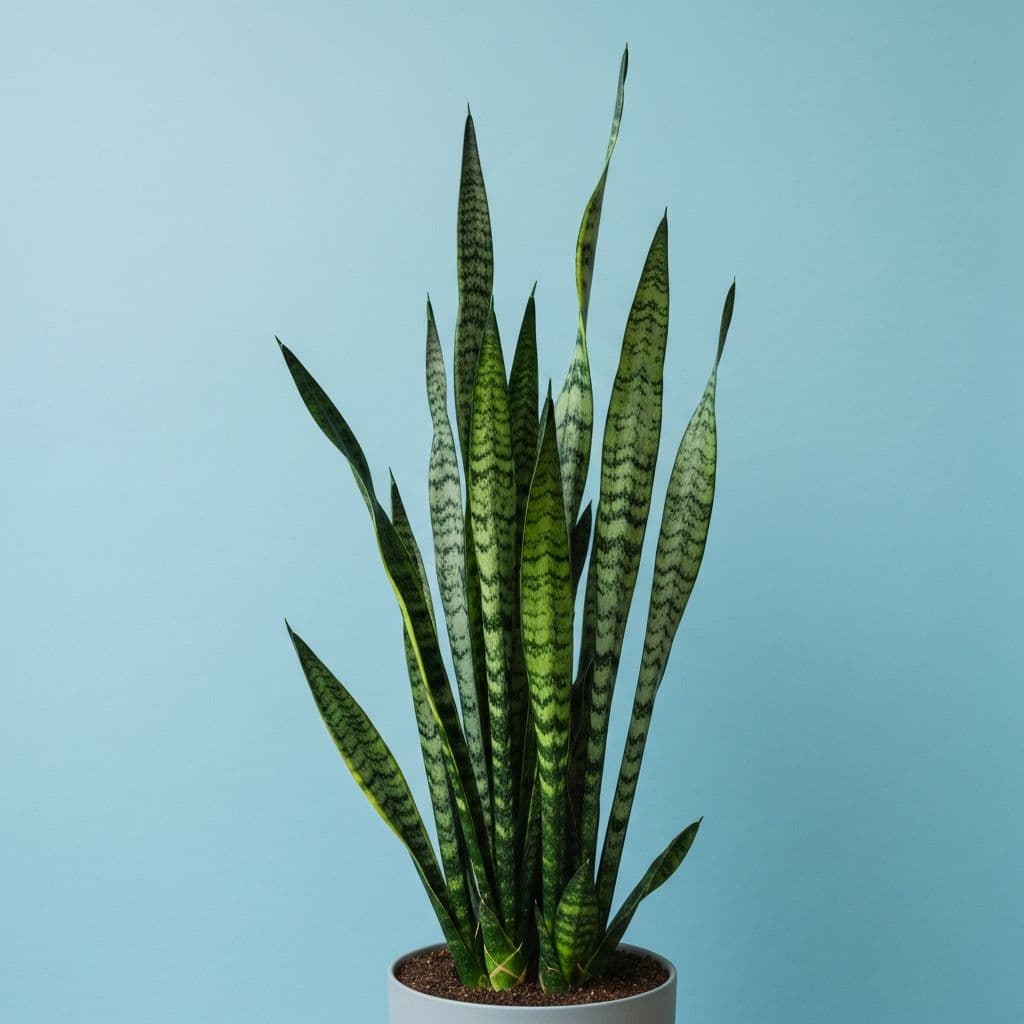
Snake Plant
Dracaena trifasciata (formerly Sansevieria)
Snake Plant
Dracaena trifasciata (formerly Sansevieria)
Architectural succulent with upright sword-shaped leaves. Thrives on neglect and tolerates almost any condition.
About Snake Plant
Native to the dry, rocky regions of West Africa, snake plants are practically immortal. Their stiff, upright leaves store water like succulents, making them incredibly drought-tolerant. They clean indoor air, tolerate low light, and require minimal attention. If you want a plant you can almost forget about, this is it.


Low-Medium Light
Snake plants tolerate everything from low light to bright indirect. They'll grow faster with more light but survive in dim corners where most plants would struggle. Avoid prolonged direct sunlight, which can fade the leaf patterns.
Ideal window: North or East-facing windows are perfect. Snake plants thrive in the indirect light of north windows or the gentle morning sun from east windows. They can tolerate darker corners where other plants would struggle.
Note: Window direction recommendations are based on the Northern Hemisphere.
The more variegation your snake plant has (yellow edges, patterns), the more light it needs to maintain those markings.


Low — Every 2-4 weeks
This is the plant to underwater rather than overwater. Let the soil dry completely between waterings—this might be every 2-3 weeks in summer and even less in winter. Snake plants are succulents at heart and store water in their thick leaves.
Overwatering is the most common way to kill a snake plant. When in doubt, wait a few more days before watering.
Snake plants don't need extra humidity. They thrive in dry, climate-controlled environments and are perfect for offices or rooms with air conditioning.
Standard — 60-80°F
Normal room temperatures (60-85°F / 15-29°C) work well. Snake plants dislike cold temperatures below 50°F (10°C) and should be kept away from drafty windows in winter.
Mushy, collapsed leaves
Root rot from overwatering. Remove affected leaves, check the roots, and repot in fresh, fast-draining soil if necessary. Reduce watering frequency significantly.
Brown tips
Usually caused by inconsistent watering or chlorinated water. Let tap water sit out overnight before using, or use filtered water.
Leaning or falling over
The pot may be too small for the root system, or the plant is reaching for light. Repot if rootbound, and rotate occasionally for even growth.
Slow or no growth
Normal in low light. Snake plants grow slowly even in ideal conditions. Patience is key.
Snake plants work in modern, minimalist spaces thanks to their architectural form. They look striking in simple, clean-lined pots. Group different varieties together for visual interest, or use a single tall variety as a sculptural accent.

Bottom Watering Compatibility
Allow soil to dry completely between waterings. Snake plants store water in their leaves and are prone to rot if overwatered.