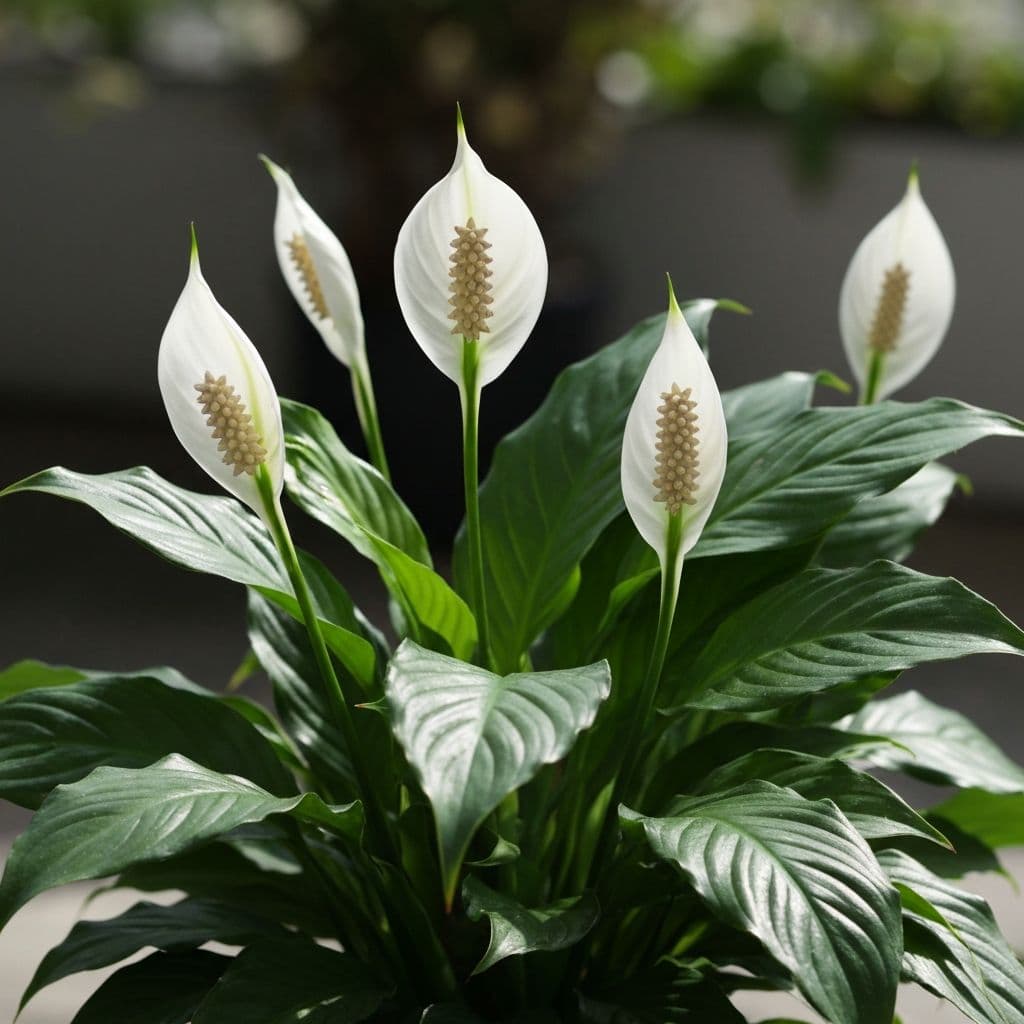
Peace Lily
Spathiphyllum
Peace Lily
Spathiphyllum
Elegant flowering plant that thrives in low light. Known for its graceful white blooms and excellent air-purifying properties.
About Peace Lily
Native to Central and South America, peace lilies bring elegance to low-light spaces. Their glossy dark green leaves contrast beautifully with the white spathes that many call flowers (they're actually modified leaves). Peace lilies are also among the best plants for cleaning indoor air, removing common toxins like formaldehyde and benzene.


Low-Medium Light
Peace lilies thrive in low to medium indirect light—making them ideal for offices and rooms without much natural light. They can tolerate bright indirect light but will burn in direct sun. If your peace lily isn't blooming, try giving it a bit more light.
Ideal window: North or East-facing windows are perfect. Peace lilies are among the few flowering plants that bloom reliably in low light. They'll tolerate north windows that would leave other plants struggling.
Note: Window direction recommendations are based on the Northern Hemisphere.
A peace lily that's not flowering usually needs more light. Move it closer to a window (but out of direct sun) to encourage blooms.


Moderate — Weekly
Peace lilies like consistent moisture. Water when the top inch of soil feels dry. They're dramatic about thirst—the leaves will droop noticeably when they need water—but they recover quickly once watered. In a POTSPOTSPOTS planter, simply keep the reservoir topped up and you'll rarely see drooping leaves.
Moderate to high humidity keeps peace lilies looking their best. They tolerate average household humidity but appreciate extra moisture, especially in winter. Brown leaf tips often indicate the air is too dry.
Standard — 65-80°F
Standard room temperatures (65-80°F / 18-27°C) work well. Avoid cold drafts and temperatures below 55°F (13°C). Keep away from heating vents that can dry out the leaves.
Drooping leaves
Usually thirsty. Check the soil and water if dry. Peace lilies droop dramatically when dry but perk up within hours of watering. If soil is moist and leaves still droop, check for root issues.
Brown leaf tips
Low humidity is typically the cause. Increase humidity with a pebble tray, humidifier, or by grouping plants together.
Yellow leaves
Old leaves naturally yellow before dropping—that's normal. If many leaves yellow at once, you may be overwatering or the plant may need fertilizer.
No flowers
Insufficient light is the usual culprit. Peace lilies bloom when they receive enough brightness (but not direct sun). Seasonal too—they typically flower in spring and early summer.
White powder on leaves
Likely mealybugs or other pests. Wipe leaves with diluted neem oil or insecticidal soap.
Peace lilies bring a refined look to any space. Their glossy leaves and white blooms suit both traditional and modern interiors. They work well on tabletops, shelves, or as floor plants in larger specimens. The classic choice for low-light bathrooms and bedrooms.
Bottom Watering Compatibility
Peace lilies love consistent moisture and respond beautifully to bottom watering. Perfect for POTSPOTSPOTS planters.