What is Bottom Watering?
Bottom watering is exactly what it sounds like: watering your plant from below rather than from above. Instead of pouring water onto the soil surface, you place the pot in a reservoir of water and let the soil absorb moisture upward through the drainage holes.
This simple technique mimics how plants access water in nature—through their roots reaching down into consistently moist soil—and offers several significant advantages over top watering.
Why Bottom Watering Works Better
1. Even Moisture Distribution
When you water from the top, water takes the path of least resistance. It flows around compacted areas, down the sides of the pot, and often drains out before the entire root ball is moistened. This leaves dry pockets that roots can't access.
Bottom watering uses capillary action to draw water evenly throughout the soil. The result: consistent moisture from bottom to top, with every part of the root zone properly hydrated.
Capillary action is the same force that lets paper towels absorb liquid. Water molecules "climb" through the tiny spaces between soil particles.
2. Stronger Root Development
Top watering encourages roots to stay near the surface where water lands. Bottom watering does the opposite—roots grow downward, seeking the moisture source. Deeper roots mean a more stable, drought-tolerant plant.
3. No Wet Foliage
Many plants dislike wet leaves. Water sitting on foliage can encourage fungal diseases and leaf spots. Bottom watering keeps moisture where it belongs: in the soil.
4. Prevents Soil Compaction
Pouring water from above can compact soil over time, reducing aeration and drainage. Bottom watering is gentler, maintaining soil structure.
5. Harder to Overwater
Here's a surprising benefit: bottom watering can actually reduce overwatering. The soil takes up only as much water as it can hold through capillary action. Once saturated, absorption stops.
How to Bottom Water (Traditional Method)
- Fill a basin or tray with room-temperature water to a depth of 1-2 inches
- Place your potted plant in the water (pot must have drainage holes)
- Wait 10-30 minutes depending on pot size and soil dryness
- Check the soil surface—when it feels moist, the plant has absorbed enough
- Remove the pot and let excess water drain
- Empty the tray—never let pots sit in standing water
Always use pots with drainage holes for bottom watering. Without them, water can't enter from below.
Which Plants Love Bottom Watering?
Excellent candidates:
- Pothos and philodendrons
- Peace lilies
- African violets
- Monsteras
- Most tropical foliage plants
Use with caution:
- Succulents and cacti (need very infrequent watering)
- Plants prone to root rot (reduce soaking time)
Not recommended:
- Orchids in bark (bark doesn't absorb well from below)
- Very large floor plants (impractical)
Self-Watering Planters: Bottom Watering Made Easy
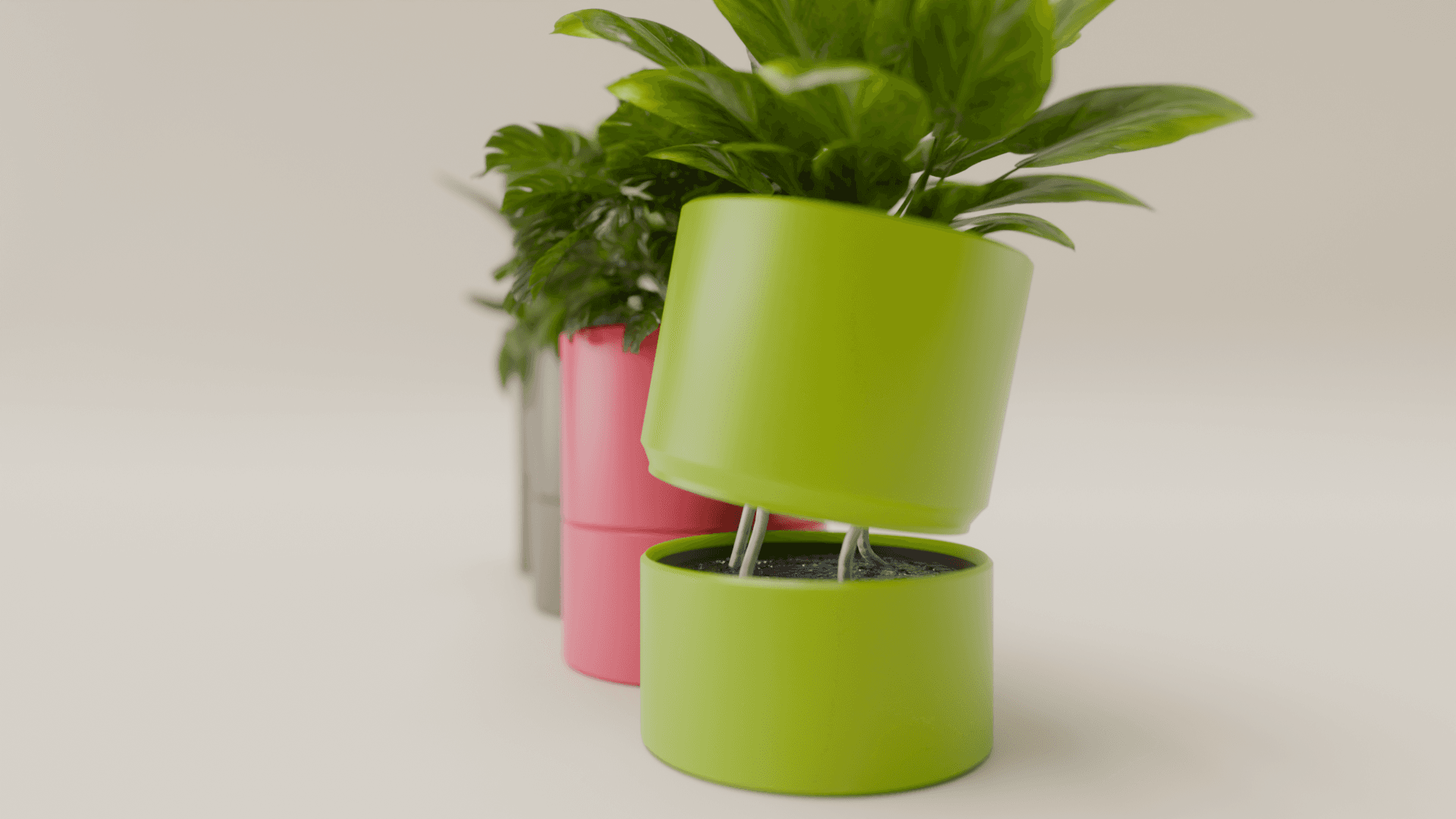
Traditional bottom watering works, but it requires attention and regular effort. Self-watering planters with built-in reservoirs automate the process—the plant draws water from the reservoir as needed, maintaining consistent moisture without daily attention.
Common Mistakes to Avoid
Soaking Too Long
More time in water isn't better. Once the soil surface is moist, the job is done. Extended soaking can lead to root rot.
Using Cold Water
Cold water shocks roots. Use room-temperature water for all watering methods.
Ignoring Drainage
After bottom watering, always let excess water drain. Never let pots sit in standing water for extended periods.
Skipping Top Watering Entirely
Occasional top watering helps flush accumulated salts from the soil. Bottom water regularly, but give a thorough top-down soak every few weeks.
Signs You're Doing It Right
- Consistent growth without wilting between waterings
- Soil that feels evenly moist, not soggy or bone dry
- Healthy roots when you repot (white or tan, not black or mushy)
- No fungus gnats (they thrive in consistently wet surface soil)
The Bottom Line
Bottom watering isn't just a trendy technique—it's a fundamentally better way to hydrate most houseplants. It delivers water where plants need it, encourages healthy root growth, and can help prevent both overwatering and underwatering.
Whether you use the traditional basin method or invest in self-watering planters, your plants will thank you for making the switch.