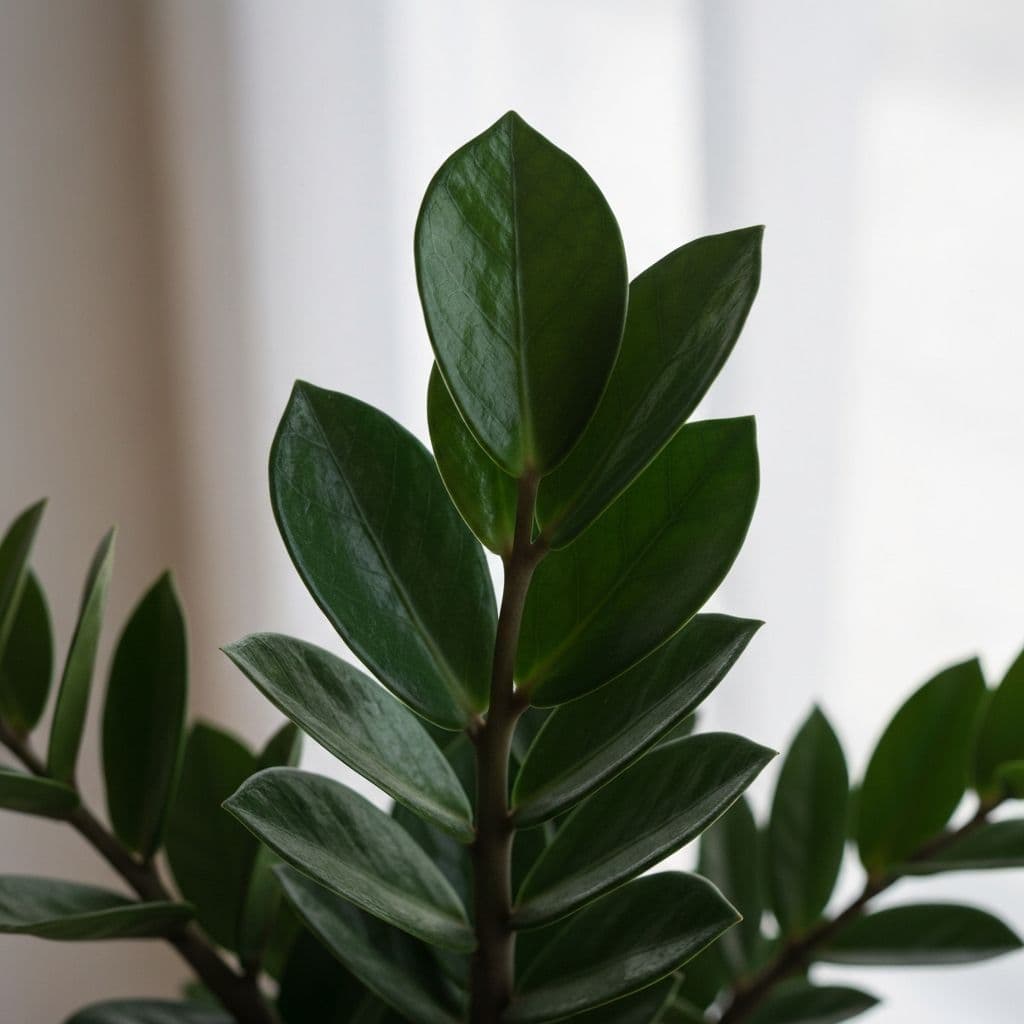
ZZ Plant
Zamioculcas zamiifolia
ZZ Plant
Zamioculcas zamiifolia
Virtually indestructible with waxy, dark green leaves. Tolerates low light, drought, and neglect—the ultimate low-maintenance houseplant.
About ZZ Plant
Native to East Africa, the ZZ plant is the ultimate "set it and forget it" houseplant. From drought-prone regions, it stores water in its potato-like rhizomes, allowing it to survive months without water. The glossy, dark green leaves look almost artificial, leading many to mistake it for a fake plant.


Low-Medium Light
ZZ plants thrive in low to medium indirect light, making them perfect for offices and dim corners. They tolerate bright indirect light but will burn in direct sun. Growth is slower in low light but the plant remains healthy.
Ideal window: North-facing windows or interior spaces work perfectly. ZZ plants handle low light that would stress most plants. East windows also work well if you want slightly faster growth.
Note: Window direction recommendations are based on the Northern Hemisphere.
All parts of the ZZ plant are toxic if ingested. Keep away from curious pets and children. Wash hands after handling.


Low — Every 2-3 weeks
Water sparingly—every 2-3 weeks in summer, monthly or less in winter. The rhizomes store significant water, so err on the side of underwatering. Yellow leaves typically mean overwatering. Let soil dry completely between waterings.
Thrives in normal household humidity. Requires no special humidity considerations—another reason it's so low-maintenance.
Standard — 65-75°F
Prefers 65-75°F (18-24°C) but tolerates a wide range. Avoid cold drafts and temperatures below 45°F (7°C).
Yellow leaves
Almost always overwatering. Reduce watering frequency and ensure soil dries completely.
Leggy stems
Low light can cause stems to stretch toward light. Rotate plant regularly and consider moving to a brighter spot.
Soft, mushy stems
Root rot from overwatering. Remove affected stems, let soil dry completely, and repot in fresh soil if severe.
ZZ plants have an architectural, modern look that works in contemporary spaces. They're stunning in simple ceramic pots and work well as floor plants when mature or tabletop plants when young.
Bottom Watering Compatibility
ZZ plants store water in their rhizomes and prefer to dry out completely. Use bottom watering sparingly and allow long dry periods.