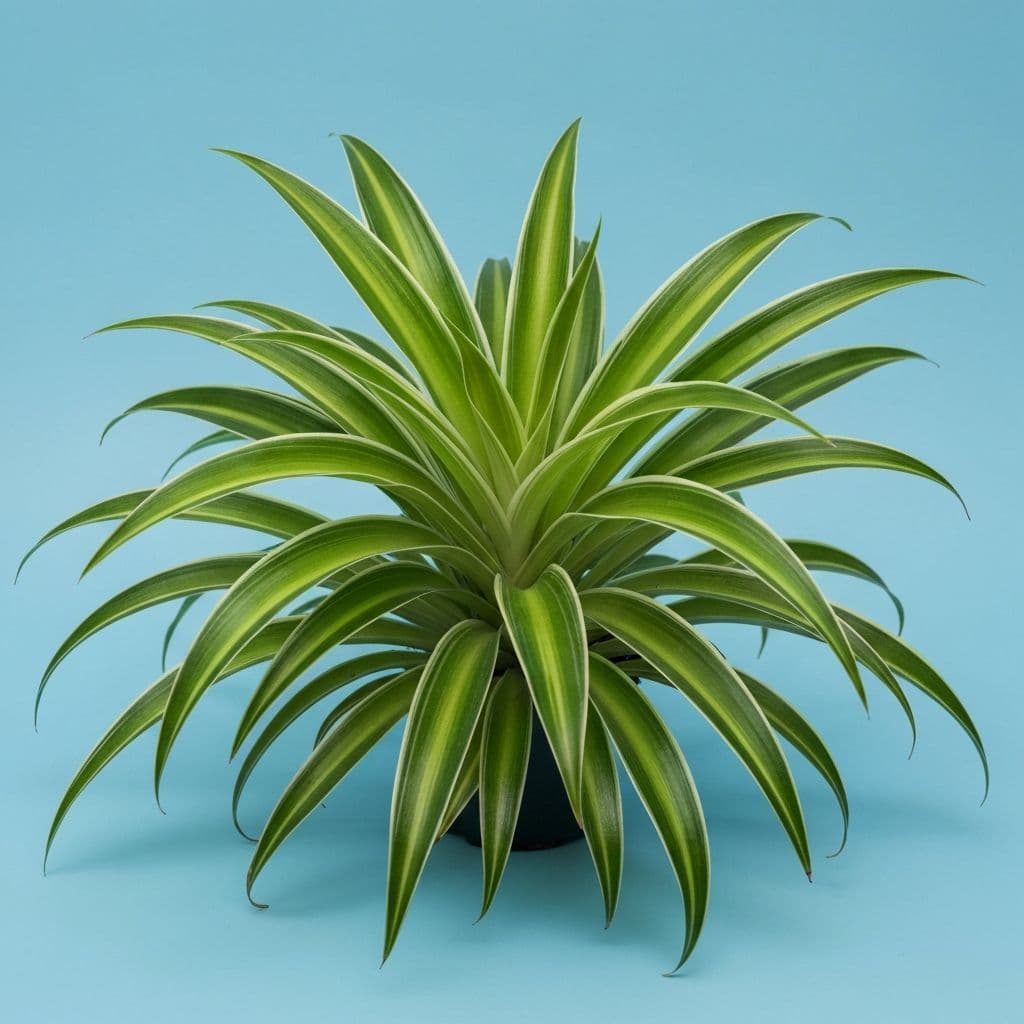
Spider Plant
Chlorophytum comosum
Spider Plant
Chlorophytum comosum
Cheerful, arching plant that produces baby plantlets on long stems. One of the easiest houseplants and excellent for beginners.
About Spider Plant
Native to Southern Africa, spider plants have been household favorites for decades, and for good reason. They're nearly impossible to kill, safe for pets, and produce charming baby plants (spiderettes) that dangle from the mother plant. They adapt to almost any indoor condition.


Medium Light
Spider plants thrive in medium to bright indirect light but tolerate low light conditions. Strong direct sun can burn leaf tips. Variegated varieties show better striping in brighter light.
Ideal window: North or East-facing windows are perfect. North windows provide gentle indirect light, while east windows offer soft morning sun. Avoid direct afternoon sun which can burn leaf tips.
Note: Window direction recommendations are based on the Northern Hemisphere.
Brown tips are common and usually caused by fluoride or chlorine in tap water. Use filtered or distilled water, or let tap water sit overnight before using.


Moderate — Weekly
Keep soil lightly moist but not soggy. Spider plants store water in their thick roots, so they handle drought better than overwatering. The tuberous roots make them excellent candidates for bottom watering.
Perfectly happy in normal household humidity. Appreciates occasional misting in very dry conditions but doesn't require it.
Cool Tolerant — 55-80°F
Standard room temperatures of 55-80°F (13-27°C) work well. They tolerate cooler temperatures down to 35°F (2°C) briefly but prefer warmth.
Brown leaf tips
Usually caused by chemicals in tap water, low humidity, or fertilizer buildup. Trim brown tips at an angle for a natural look.
No babies forming
The plant needs to be slightly root-bound and mature (usually 1+ year old) to produce spiderettes. Bright light also encourages baby production.
Pale leaves
Too much direct sun or nutrient deficiency. Move to indirect light and feed monthly during growing season.
Spider plants look wonderful in hanging baskets where their spiderettes can cascade freely. They also work well on high shelves or pedestals where the babies can drape down.
Bottom Watering Compatibility
Spider plants thrive with bottom watering. Their thick, tuberous roots absorb water efficiently from below.