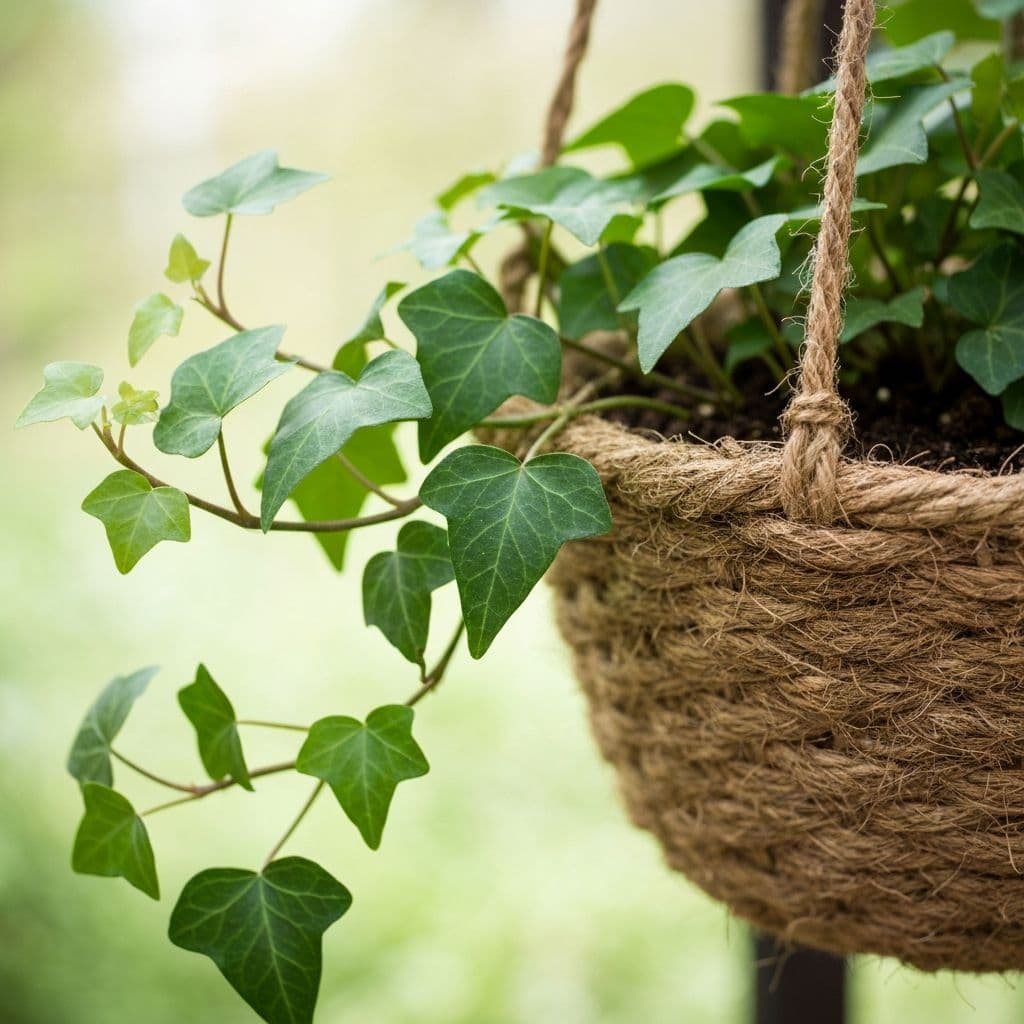
English Ivy
Hedera helix
English Ivy
Hedera helix
Classic trailing vine with iconic lobed leaves. Hardy and adaptable, perfect for hanging baskets and topiaries.
About English Ivy
Native to Europe, English ivy is a timeless classic that evokes cottage gardens and European estates. Its lobed leaves come in various sizes and variegations, from solid green to silver and gold varieties. It grows vigorously as a trailing vine or trained on topiaries.


Medium Light
Adapts to most light conditions from low to bright indirect. Variegated varieties need more light to maintain their patterns. Avoid harsh direct sun which can scorch leaves.
Ideal window: North or East-facing windows work well. North windows provide consistent indirect light, while east windows offer gentle morning sun. Ivy is adaptable but avoid hot, sunny south or west windows.
Note: Window direction recommendations are based on the Northern Hemisphere.
Ivy prefers cooler temperatures than most houseplants. If your ivy struggles in summer, move it to a cooler spot or air-conditioned room.


Moderate — Weekly
Keep soil evenly moist but not waterlogged. Allow the top inch to dry between waterings. Ivy is more drought-tolerant than many realize but performs best with consistent moisture.
Appreciates moderate to high humidity. Low humidity invites spider mites, ivy's main pest. Regular misting helps both humidity and pest prevention.
Cool-Tolerant — 50-70°F
Prefers cool temperatures: 50-70°F (10-21°C). Tolerates cooler temps down to 40°F (4°C). Dislikes heat and dry air.
Spider mites
The most common issue. Check leaf undersides regularly. Increase humidity and mist frequently to prevent.
Brown, crispy leaves
Low humidity, underwatering, or excessive heat. Address environmental conditions.
Leggy growth
Insufficient light. Move to brighter location and pinch tips to encourage bushiness.
English ivy excels in hanging baskets, cascading from shelves, or trained on wire frames and topiaries. Its classic appearance suits traditional, cottage, and European-inspired decor.
Bottom Watering Compatibility
English ivy thrives with bottom watering. Check reservoir weekly during growing season.