Liberty Hyde Bailey

Liberty Hyde Bailey

The godfather of American horticulture

1858–1954

Bailey revolutionized American horticulture education and wrote over 60 books on gardening and agriculture. His work at Cornell University established horticulture as a respected academic discipline.

Liberty Hyde Bailey was perhaps the most influential figure in American horticulture. As a professor and later dean at Cornell University, he transformed gardening from folk knowledge into a science-based discipline accessible to ordinary people.

His Approach

Bailey believed in practical education. His books are written clearly, without unnecessary jargon, and always grounded in real-world application. He tested everything himself in Cornell's experimental gardens.

Why His Work Matters Today

While some specific recommendations have evolved with modern research, Bailey's fundamental principles remain sound. His emphasis on understanding why plants behave as they do—rather than just memorizing rules—makes his work still valuable for any serious gardener.
Works (6)

Manual of Gardening

Manual of Gardening(1910)

Comprehensive guide to home grounds, flowers, fruits, and vegetables. A practical handbook for growing everything from lawns to orchards.

The Principles of Vegetable-Gardening

The Principles of Vegetable-Gardening(1901)

Scientific principles behind successful vegetable cultivation, from soil preparation to seed selection.

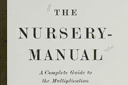
The Nursery Manual

The Nursery Manual(1896)

Complete guide to plant propagation covering seeds, cuttings, grafting, and nursery management.

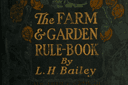
Farm and Garden Rule-Book

Farm and Garden Rule-Book(1911)

Ready rules, recipes, and formulas for everyday farm and garden problems. A practical reference.

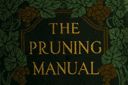
The Pruning-Manual

The Pruning-Manual(1898)

Principles and practice of pruning and training as applied to American conditions.

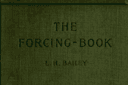
The Forcing-Book

The Forcing-Book(1897)

A manual of the cultivation of vegetables in glass houses—hotbeds, coldframes, and forcing houses.

Additional Resources