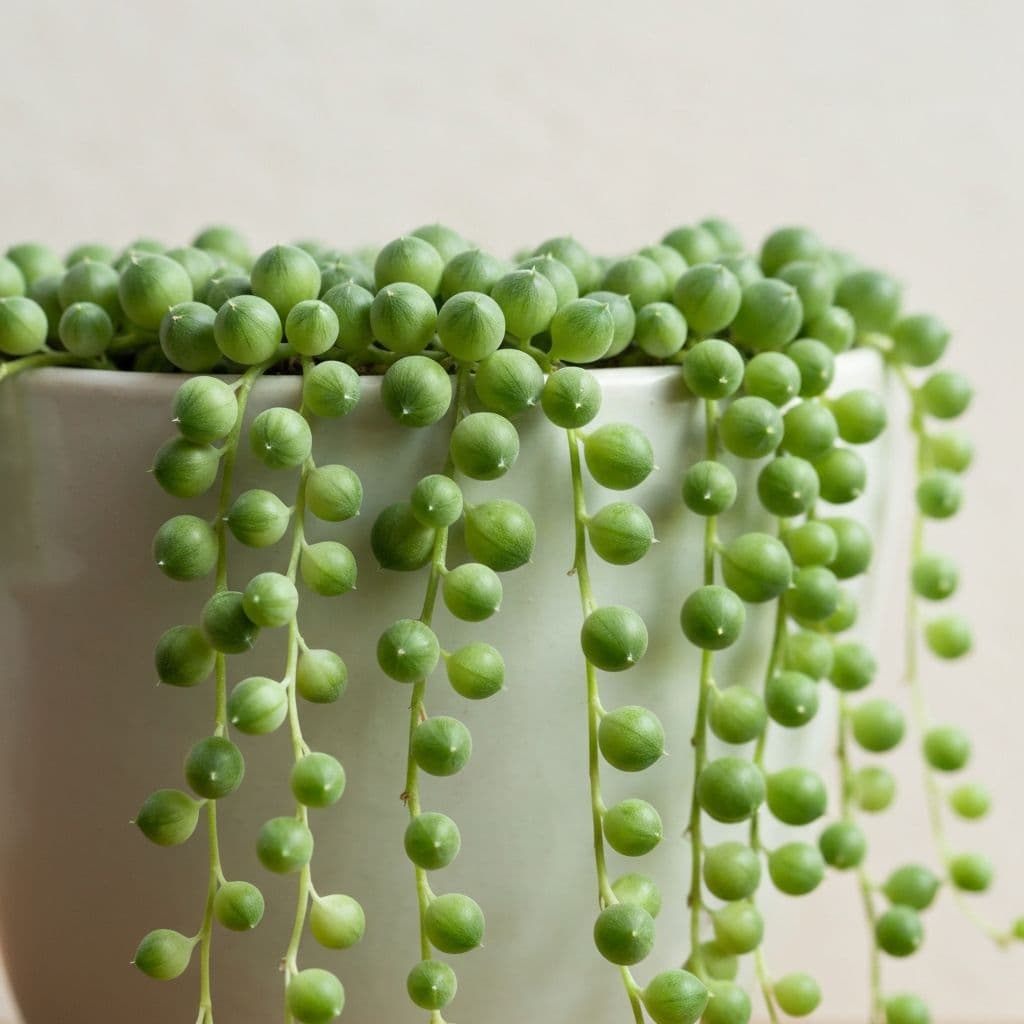
String of Pearls
Senecio rowleyanus
String of Pearls
Senecio rowleyanus
Trailing succulent with spherical, bead-like leaves. Stunning in hanging baskets but requires careful watering to prevent rot.
About String of Pearls
Native to the dry regions of Southwest Africa, string of pearls is one of the most distinctive succulents, with trailing stems covered in spherical, pea-like leaves. These "pearls" are actually modified leaves that store water. When happy, strands can reach several feet and produce small white flowers.


Medium-High Light
Bright indirect light with some direct morning sun. Needs more light than many think—insufficient light causes sparse growth and smaller pearls.
Ideal window: East or South-facing windows are best. East windows provide gentle morning sun, while south windows offer bright light throughout the day. Protect from intense afternoon sun which can scorch the pearls.
Note: Window direction recommendations are based on the Northern Hemisphere.
The number one killer of string of pearls is overwatering. When in doubt, don't water. Pearls shrivel slightly when thirsty, which is your cue to water.


Low — Every 2-3 weeks
Water only when pearls look slightly deflated or wrinkled—typically every 2-3 weeks. Water thoroughly then let dry completely. Avoid getting water on the pearls themselves.
Prefers dry conditions. Humidity encourages rot and fungal issues. Avoid bathrooms and misting.
Standard — 50-80°F
Comfortable at 50-80°F (10-27°C). Tolerates heat well but avoid frost.
Mushy, translucent pearls
Overwatering and rot. Reduce watering immediately. Remove affected strands.
Shriveled, flat pearls
Underwatering. Give a thorough drink.
Sparse strands with few pearls
Insufficient light. Move to a brighter location.
String of pearls is stunning in hanging baskets where strands can cascade freely. Also works trailing from high shelves or in macrame hangers. The unique form adds whimsy to any space.
Bottom Watering Compatibility
String of pearls is prone to rot. Top watering with complete drying between is safer than bottom watering.